

I’ve been on the road these past several weeks — this week at Experience Inbound in Wisconsin which I highly recommend! — speaking on how to thrive in our zero-click world, and what the heck Zero Click Marketing actually is. I was preparing to do all this in a friendlier conversational format in a Thursday webinar with my friend Matt Lerner of SYSTM. While I was walking him through my deck, we had one of those productive disagreements that sticks with you.
I was explaining the deck like, “Here’s how I think marketing works now.”
Matt, who comes from more of a growth marketing background, saw it and basically said, “This is content marketing.”
The funny thing is, I don’t think either of us was wrong.
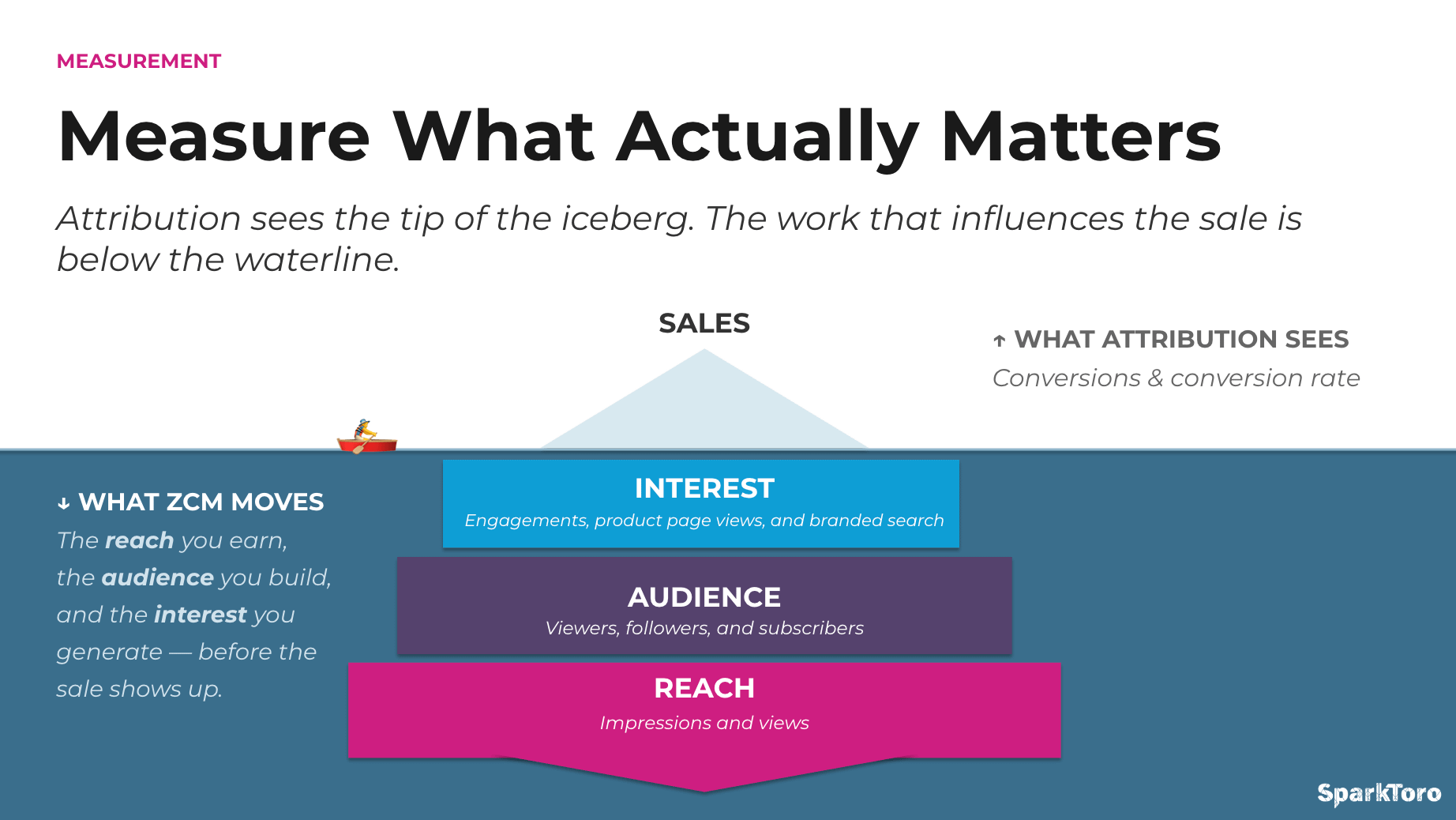
Because yes, the deck talks a lot about content. Native-to-platform posts. Search behavior. Public record. Reddit. AI answers. But to me, none of that is just “content.”
It’s how buyers understand you. Learn to trust you. Remember you. It’s how they decide you’re worth seeking out later.
That’s not a content problem. That’s a business problem.
For a long time, content marketing was treated like a traffic function. Publish the blog post. Rank for the keyword. Get the click. Capture the lead. Attribute the conversion. Repeat.
That system was never as clean as we pretended it was, but at least the story made sense.
Now the story is breaking.
Search keeps growing, but more searches end without a click. Social platforms punish links and reward native content. AI answers can shape perception before someone ever sees your homepage. Reddit threads, podcasts, creator mentions, comparison pages, and branded searches all influence the buyer journey in ways your analytics will never fully show.
So yes, content is involved.
But the job is bigger than publishing. The job is to create understanding, trust, recall, and preference wherever your buyer already is. That was one of the final ideas in my deck: the new job of digital marketing is not merely to send people to your website. It’s to build those four things across the places where decisions are actually shaped.
This is also why Cyrus Shepard’s recent research on Google winners and Kevin Indig/AirOps’ research on ChatGPT citations felt so timely to me.
Both point toward the same idea that broad content alone is becoming less defensible. The winners are more useful, more focused, more distinct, and harder to replace.
Cyrus’s research looks at which sites are winning in Google. His analysis suggests that the winners are more likely to offer a product or service, allow task completion, own proprietary assets, maintain topical focus, and have a strong brand.
Kevin and AirOps looked at ChatGPT citations and found something different but related: pages that closely match a user’s query seem to have an advantage over pages that try to cover everything.
Put those together, and the classic content marketing instinct starts to look shaky.
The answer is no longer to write the most comprehensive guide — it’s to build a destination worth seeking out that allows the user to fulfill their long-tail query or even better, their transaction.
That’s where the business problem comes in. And by the way, I cover this in more detail in this week’s Zero Click Marketing podcast:
…And this is where I think Matt’s reaction helped me see the tension more clearly.
A content marketer may look at Zero Click Marketing and see an argument about content distribution.
A growth marketer may look at it and see a debate about channels, conversion paths, and measurement.
A founder may look at it and see something else entirely: a question of whether the company is distinct enough to be remembered when the click never comes.
I think all of those readings are valid.
But I also think we’re reaching the point where they are converging.
The “content problem” and the “business problem” are becoming the same problem.
Because when clicks were abundant, you could get away with content that existed mostly to capture demand. You could write the “ultimate guide,” rank well, earn the click, and let the website do the rest.
But when clicks get scarcer, the content has to do more work before the visit ever happens. It has to explain the category, create trust, generate memory, and shape the public record. The content has to help Sales, Customer Success, Comms, Product, and Demand Gen do their jobs better. And if content has to do all this, then… it’s a function of business infrastructure.
This is the part I want marketers to take more seriously.
If we keep framing content as the stuff that fills the blog, we will keep fighting for scraps.
But if we can show that content shapes demand, supports sales, reduces friction, builds trust, strengthens the public record, and gives people a reason to seek us out directly, then we are not talking about a publishing calendar anymore.
We are talking about how the business earns attention in a world where attention is harder to move.
So maybe Matt and I weren’t disagreeing after all.
Maybe we were just looking at the same problem from two sides.
He saw content marketing. I saw business strategy. And increasingly, I think those are becoming the same thing.
And you know what? I don’t totally know where our conversation is going to go.
I mean, I know what we’re going to talk about. I just don’t know what we’re going to talk about.
If you want to see that play out live — and by “live,” I also mean “sign up now and get the recording later” — join us for the webinar.
🧁 Petits Fours:
Four discrete, bite-sized thoughts because this newsletter, after all, is called the “Menu.”
Content as a Service (CaaS): The Framework That Aligns Marketing with the Business: You know how several paragraphs ago I said, “The content has to help Sales, Customer Success, Comms, Product, and Demand Gen do their jobs better?” Well. I have more on that! Check out this past blog post of mine where I teach you how to treat Content as a Service. The best content has a job to do and a client to serve. (I also talk about this in my keynote.)
“Dad, will you generate me a story?”: That’s the punchline of one of my favorite marketing destinations — Marketoonist. I got to meet creator Tom Fishburne at this week’s Experience Inbound, and I’ve loved his work for years. I was really stoked to get the firsthand experience of what a lovely human he is. You probably already read his comics but if not… then yay! Ya learned something new.
HubSpot’s Field Notes: Ok, now this is funny. I also met Kyle Denhoff this week (another lovely human!) and after swapping funny stories about our kids, we nerded out about making things, and we talked about our podcasts. Embarrassingly, I didn’t know the name of his show and I laughed when he told me it was “Field Notes” — because, I said, “I swear! I didn’t copy you!” I have a recurring segment called Field Notes in the Zero Click Marketing podcast. He teasingly asked if Claude came up with that name and I shook my head, “Sadly, that is all me. I guess we marketers aren’t always as clever as we think.” Anyway, now I’m nerding out in my hotel room watching clips of his show. Check it out!
And look, ABSOLUTELY NO ONE ASKED: But here was my keynote outfit this week. A vest and trousers from Cider — a fast fashion-y brand but you know what, their clothes generally fit me better than most other brands and the styles and silhouettes are so much more interesting that what you typically find at retailers. Although one sneaky thing I did was tailor my own vest by hand. I cut it at the shoulders, trimmed off 4cm, and sewed it back together. You’d never know… until I put my hair up and you see the Frankenstein-esque stitches. Appalling.
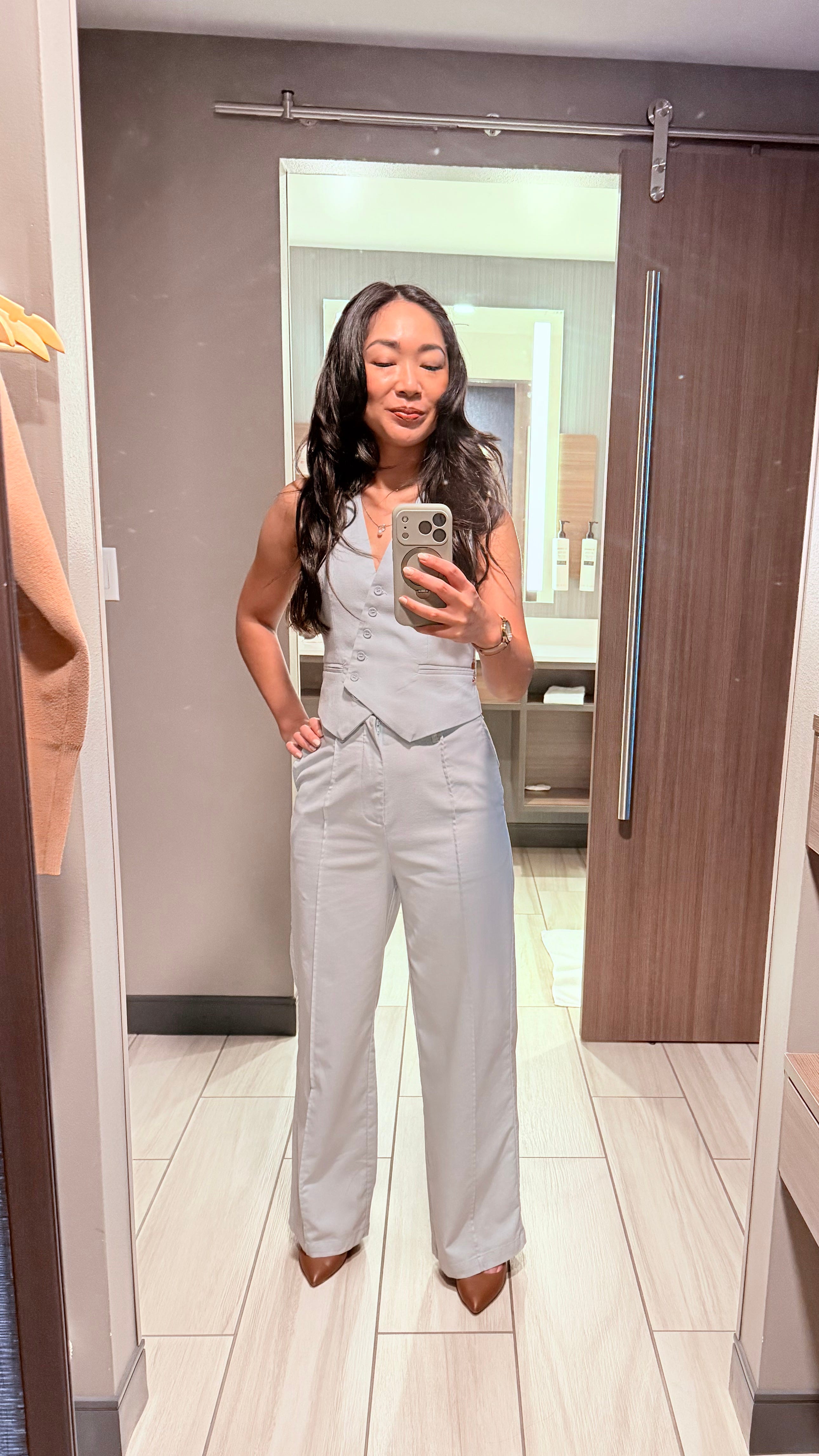
Haters will say I wish I were a fashion influencer. And you know what? The haters are right. But you don’t choose the B2B lyfe. It chooses you.
See ya next week, besties!
Oooh! I love this Amanda! I’ve been in the same space with content as a business function and how to frame it so it’s easier to sell. Because getting the buy in early makes all the difference.
As always, great stuff.
But for your webinar: the million-dollar question becomes is what is "content that shapes demand, supports sales, reduces friction, builds trust, strengthens the public record, and gives people a reason to seek us out directly?
There are a lot of heavy words there to bring definition to. Obviously, be a brand that does these things, i.e. the business problem, is the answer. But for people "filling the blog," what does taking this new angle with this look like?
I always love say what only you can say. But the shape demand, support sales, reduce friction piece can get lost in gpt generic land and I'd love your take!